This story was originally published on January 27, 2020.
Seltzers aren’t the only thing that have spiked in Austin’s popular bar scenes.
While the proclaimed ‘Live Music Capital of the World’ is renowned for its good vibes and laid back atmosphere, perhaps the vibes are a little too good to be true. As the city’s population rises, recent data collected from the Texas Alcoholic Beverage Commission (TABC) suggests a spike in licensed vendors serving alcohol to minors between January 2014 and December 2019, especially in popular bar-harboring zip codes.
The illegal sale, serving, or delivery of alcohol to minors – also known as a 504 violation– has seen a large spike in the past two years. TABC Public Information Officer, Chris Porter suggested one possible reason for the increase in uncovered violations is most likely the effects of the agency devoting additional resources to undercover operations in 2018 as well as the agency’s performance measures requiring an increased number of investigations.
Despite a rise in investigations and recorded 504 violations, Porter said underage compliance operations are never meant to be intentionally deceptive and practices have remained fairly similar since 2014.
“We don’t want to tip the hand in favor of the ‘gotcha’ type situation,” said Porter. “We want to make sure that the retailers are able to observe all of the signs of an underage person before they make that sale.”
Porter explained the importance of promoting voluntary compliance among retailers, stating that as part of the operation, the minor must use their actual state-issued ID and answer truthfully if the retailer asks the age of the minor attempting to make a purchase. However, Porter also said that TABC hones in on specific areas to most effectively conduct undercover sting operations.
“We operate on what we call a ‘risk-based approach’,” said Porter. “So if we have intelligence from either citizen complaints or from local police agencies, then we will definitely target those bars. Other than that we do have a rotating list that we call the ‘priority list’ that again is based on where the most risk for public safety is.”
According to state demographers, the city of Austin alone gains anywhere from 120 to 150 new residents per day. The majority of 504 violations occur in the zip codes of 78701, 78705, and 78758– also known to be areas most commonly frequented by Austin’s college-aged population. While some college students are of legal drinking age, the vast majority are not. Previous Hole In The Wall bar manager, Andy Kahn, managed at the bar following a 504 violation and commented on the proceeding ramifications and what it meant for business.
“Whenever a violation like that happens,” said Kahn,” You’ll have more frequent visits by TABC officers. Every bottle’s tax stamps are being checked. They’ll probably send in a minor operative to sting – to see if you’re going to pop again.”
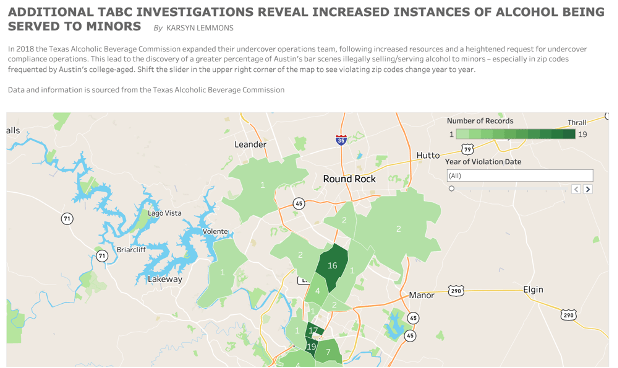
Fines for committing 504 violations fluctuate based on a number of factors, though typically range from $1200 to $3000 with the exception of Raku Sushi and Asian Bistro on Rio Grande Street which received a fine of $13,500 in 2018.
To prevent future violations and risk endangering the establishment’s license to sell alcohol, Kahn claimed he and his fellow staff practice a number of ways meant to prevent the unintentional serving of alcohol to minors. For instance, if two people come up to the bar and order a pitcher then request five glasses for additional people, Kahn requests those people also come up to the bar and have their IDs checked before handing over the extra glasses.
“If it’s a crowded bar, it gets pretty difficult,” said Kahn. “You just have to do your best.”
While TABC’s Chris Porter reported that undercover investigations offer some of the biggest results in terms of public safety, the Texas Alcoholic Beverage Commission also increased its staff and resources in an effort to continue to meet the needs of Texas’ growing population of alcohol consumers.


Leave a Reply